Mayan healing rituals merging the cosmos with health represent an ancient system combining spiritual cosmology, energy balancing, and herbal medicine. These profound practices connect the Sky World, Middle World, and Underworld through shamanic ceremonies that address physical symptoms and spiritual imbalances. Understanding how the Mayans cultivated harmony between celestial energies and human wellness reveals a sophisticated medical tradition that continues influencing contemporary holistic healing.
Last Updated: February 2026
Table of Contents
- Understanding the Mayan Cosmovision
- The Mayan Concept of Health
- Role of Shamans and Healers in Mayan Society
- Traditional Mayan Healing Techniques
- Ceremonial Rituals and their Significance
- The Mayan Calendar and Health
- Influence of Mayan Gods on Healing Rituals
- Contemporary Practice of Mayan Healing
- Criticisms and Misinterpretations of this practice
- The Future of this method
Understanding the Mayan Cosmovision
The Mayan culture offers a rich tapestry of beliefs and traditions that echoed through centuries. One of the key elements in the culture is how the cosmos or universe plays a significant role in their everyday lives.
Importance of cosmos in the Mayan culture
You might ask; what is distinct about the Mayan culture appreciation of cosmos? For the Mayans, the cosmos isn’t just an abstract concept; it is deeply interwoven in their daily experiences, influencing patterns of behavior, rituals, and traditions – even their health. Understanding the cosmos was the pivotal part of life, belief system, and governance, as documented by the National Center for Complementary and Integrative Health.
The Mayan view of the Universe
Here’s a fascinating part; Mayans conceptualize the universe by dividing it into three parts—the Sky World, the Middle World, and the Underworld. Each part signifying different elements of existence. The Sky World, home to celestial bodies and deities, signify divinity and higher wisdom. The Middle World, our planet earth, signifies physical beings and their experiences. The Underworld isn’t perceived as a place of eternal damnation, but a space for transition and transformation.
Principles of harmonious existence
To truly appreciate the Mayan Cosmovision, understanding the principles of harmonious existence is essential. According to Mayan beliefs, these three realms of cosmos are not solitary entities; they’re interconnected and constantly interacting with each other. Human beings, as part of this cosmic ballet, must maintain harmony with all domains of existence. Disruption in any one sphere invariably affects the balance in others.
The Mayan Concept of Health
Their holistic perception of the universe extends to the Mayan understanding of health, which is not merely treating the apparent symptoms of a disease but roving deeper into the spiritual realms of an individual.
Physical and spiritual wellbeing
In the Mayan concept, health is a complex harmony of physical, mental, and spiritual states. A disease doesn’t signify just a molecular anomaly but a disharmony that might have roots in individual’s spiritual existence, effect of societal interactions, or an imbalance in cosmic energies.
Interrelation of body, spirit, nature and cosmos
The intriguing part is the interrelations of body, spirit, nature and cosmos. Human body isn’t separable from spiritual existence or the natural and cosmic environment. This interconnectedness makes the health a comprehensive approach where the cure isn’t just physical but involves rectification of spiritual and cosmic anomalies as well.
Principles of balance and energy in maintaining health
Central to the Mayan concept of health are principles of balance and energy. Some might call it “Chi” or “Prana”; Mayans call it “Ch’ulel”. This life force is our energetic link to the cosmos. It’s only when this energy is balanced, one can perceive true health. An imbalance of Ch’ulel manifests as diseases or emotional disturbances.
Role of Shamans and Healers in Mayan Society
Enter the Mayan Shamans and healers, custodians of the sacred knowledge of cosmic, spiritual and physical intersections. They’re bestowed with the ability to comprehend the messages of cosmos and translate it into healing energy.
The training of a healer or Shaman
You could wonder, how does one become a Shaman? It’s a meticulous process that involves rigorous training under a master healer. This includes understanding complex ceremonies, studying an array of herbs and mastering the technique of energy manipulation and channeling.
Roles and responsibilities
Shamans hold esteemed positions in the society. They are not just healers but spiritual guides, arbitrators, wisdom keepers and astronomers. Apart from healing physical and spiritual ailments, they’re also entrusted with the responsibilities of maintaining harmony among community members and nature.
Connection between Shaman and the spiritual space
The true effectiveness of a Shaman lies in their connection to the spirit world. By communicating with the spirit world, they discover the spiritual causes of diseases and seek guidance for treatments. They invoke spirits into physical area and facilitate harmony between cosmos and human spirit.
Traditional Mayan Healing Techniques
The Mayan healing techniques are a fusion of spiritual engagement and tangible practices that revolve around using nature’s bounty and energy.
Use of herbs and plants
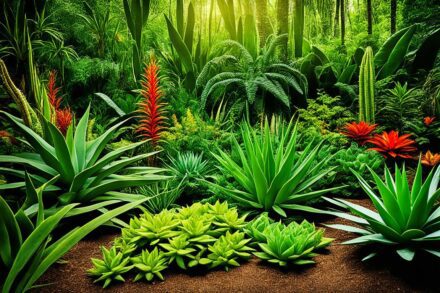
To treat physical symptoms, Mayan healers have an impressive understanding of local flora. Various herbs, resins and plants are used as medicines to restore harmony in the human body. Each plant is thought to have a specific therapeutic vibration that matches a specific physical disorder. This aligns with National Center for Complementary and Integrative Health findings.
Energy balancing techniques
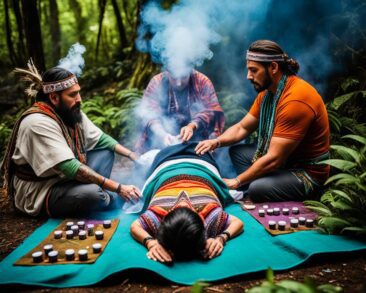
Another aspect would be the energy balancing techniques, where healers manipulate the Ch’ulel to restore its equilibrium. This can be done through massage, laying on of hands, or use of crystals to channel cosmic energies.
Spiritual cleansing rituals
On the spiritual side, healers carry out cleansing rituals to rid negative energies or spirits. These rituals often involve incense, chanting and prayers.
Ceremonial Rituals and their Significance
Ceremonial rituals are paramount in the Mayan healing procedure as they invoke the sacred link between the universe and individuals.
Importance of ceremonial rituals
For the Mayans, ceremonial rituals go beyond physical motions. They serve as the bridge to the spiritual world, using symbols, chants and offerings. During these ceremonies, the healers channel the cosmic energies to provide healing.
Common features of Mayan healing rituals
Mayan healing rituals often involve the healer, the patient, family members, and occasionally the community. These rituals could range from a simple prayer to complex ceremonies lasting several days, filled with dance, music, and fasting.
Ritual tools and their symbolism
Shamans use various tools for these rituals, each carrying unique symbolism. For instance, colored candles represent different energies, copal incense attracts good spirits, while fig tree bark symbolizes purification.
The Mayan Calendar and Health
The Mayan Calendar, particularly the Tzolk’in calendar, plays an integral role in the concept of health and healing. This connection lies in the belief that each day carries a specific energy that influences all beings.
Understanding the Tzolk’in calendar
The Tzolk’in Calendar contains a complex cycle of 260 days, each carrying a specific energy. According to Mayans, the day a person is born influences their character and destiny, including health predispositions.
Influence of calendar cycles on health
You might find it fascinating that nothing is incidental. Everything from a person’s birth day, the timing of a healing ritual, to the progression of an illness is tied to these calendar cycles.
Celestial events and health implications
Even celestial events are believed to have health implications. For example, eclipses and solstice are thought to disrupt cosmic energy hence triggering health issues.
Influence of Mayan Gods on Healing Rituals
The Mayan Pantheon housed various gods that were involved in maintaining health. Invoke these deities during healing rituals were common.
Main deities associated with health and healing
Ixchel, the goddess of fertility and medicine, and Itzamna, the god of shamanism and healing, are some of the significant deities in this approach.
Invocation of Gods in healing rituals
During healing rituals, healers respectfully invoked these gods to channel their power and wisdom towards the healing process.
Iconography and symbols in healing rituals
Symbols and iconography associated with these deities often integrated into the rituals, where each iconography carries a different spiritual meaning and purpose.
Contemporary Practice of Mayan Healing
While the ancient Mayan civilization might be long gone, their culture and healing practices continue to capture the global attention.
Survival and adaptation of Mayan healing practices
The contemporary Mayan healing practices have adapted over time, but the core principles remain conserved. The intimate interaction with nature, primal elements, and cosmos continue to baffle modern medicine, appealing to those who seek holistic healing approaches.
Influence and incorporation in modern medicine
Though often dismissed as archaic, Mayan medicine’s value is increasingly getting recognized, and some principles have been incorporated into modern medicinal practices, particularly in holistic and alternative healing.
Global interest and study of Mayan medicine
Without a doubt, the interest in Mayan healing practices has sparked a global shift, pushed by researchers, anthropologists and spiritual seekers trying to explore deeper into this ancient wisdom.
Criticisms and Misinterpretations of Mayan Healing Rituals
Despite this renewed interest, this method are not exempt from criticisms and misinterpretations.
Misuse and appropriation of Mayan culture
With its growing popularity, there has been a surge in misuse and appropriation of the Mayan culture. From commercializing sacred rituals to misrepresenting ancient practices, misuse has diluted the true essence of Mayan traditions.
Scientific skepticism and challenges
Naturally, these practices face scientific skepticism. Many find it challenging to correlate spiritual elements with physical healing. However, some scientific studies have validated the medicinal properties of several plants recognized in traditional Mayan medicine.
Importance of respectful engagement and authenticity
Amidst these criticisms and challenges, it is essential to engage with these practices respectfully, acknowledging their cultural origin and maintaining authenticity.
The Future of Mayan Healing Rituals
While the path isn’t without hurdles, the future of Mayan healing rituals holds exciting possibilities.
Ongoing research and understanding
Current and future research tasks seek to increase our understanding of these practices, interface between spirituality and health, and potential applications to modern health care practices.
Preservation and revitalization efforts
Recognizing the importance and richness of these practices, preservation and revitalization initiatives are active within indigenous communities and globally. These efforts focus on training and education to ensure the survival of this ancient wisdom.
Integration of modern science and ancient wisdom
Lastly, perhaps, what lies in the future is recognizing the importance of integrating modern medical science with these time-tested traditions. Respecting and exploring this could lead to a more diverse, inclusive, and holistic approach to health and healing.
The this practice offer a unique perspective on health, amalgamating the cosmic connections with earthly existence. While there may be skepticism and challenges, its value lies in the profound understanding that health transcends beyond the physical space, connecting us with nature and the cosmos. A concept that could potentially reimagine modern healthcare approaches.
Mayan Healing Rituals
Here are three authoritative sources offering comprehensive insights into these techniques, with each providing unique perspectives on this rich cultural heritage:
- Ancient Origins: Unlocking the Secrets of Maya Healing This site provides a deep dive into the ancient healing practices of the Maya, highlighting their use of chia seeds, holistic healing approaches, and cacao among others. It emphasizes the balance between spiritual and physical well-being in Maya healing practices, also touching on traditional sweat baths and hydrotherapy. The discussion is rooted in the belief that ancient Mayan knowledge can contribute to modern healthcare practices. Visit: www.ancient-origins.net
- Moments Log: Mayan Herbalism: Sacred Plants and Healing Practices Moments Log explores the spiritual and physical aspects of Mayan herbalism, detailing how the Mayans believed plants had spirits and could offer healing and insights into the universe. This source outlines the evolution of Mayan herbal practices and their integration with modern medicine, offering a holistic approach to healing that respects both the physical and spiritual health. Visit: www.momentslog.com
- Wikipedia: Maya Medicine A comprehensive overview of Mayan medicine as practiced historically, including ritual practices, sweat baths, plant and herbal medicine, and the use of entheogens. It details the processes involved in traditional healing ceremonies, the role of the medicine man, and the use of herbal remedies and sweat baths for purification and healing. This entry also discusses the contemporary relevance of these ancient practices. Visit: en.wikipedia.org
Each of these sources offers a unique lens through which to understand this technique, from their spiritual underpinnings to their practical applications in health and wellness. Whether you’re interested in the holistic principles behind the rituals, the specific plants and practices used, or the broader cultural significance, these resources provide a thorough grounding in the subject.
Frequently Asked Questions
What is The Mayan Healing Rituals?
The this practice is a complementary practice that involves using crystals and gemstones believed to carry specific energetic properties. Practitioners place them on or near the body to support balance and well-being. This practice is not a substitute for professional medical care.
Are herbal remedies effective?
Many herbal remedies have a long history of traditional use, and some have scientific studies supporting their benefits. However, effectiveness varies by herb and individual. Always consult a healthcare professional before using herbal remedies, as they can interact with medications.
Is The Mayan Healing Rituals safe for everyone?
The this approach is generally considered safe for most people. However, individuals with certain health conditions, pregnant women, or those on medications should consult a healthcare professional before beginning. A qualified practitioner can help assess suitability.
How do I choose the right crystals?
While you are here, guide to cultural healing is another resource our community swears by.
Choose crystals based on your intentions and what resonates with you intuitively. Popular starter crystals include clear quartz, amethyst, and rose quartz. Research each crystal’s traditional associations and consider consulting a knowledgeable practitioner.
Can The Mayan Healing Rituals be combined with conventional medicine?
Many people use The this technique alongside conventional medical treatments as a complementary approach. Always inform your healthcare provider about any complementary practices you use. Never discontinue prescribed treatments without medical guidance.