
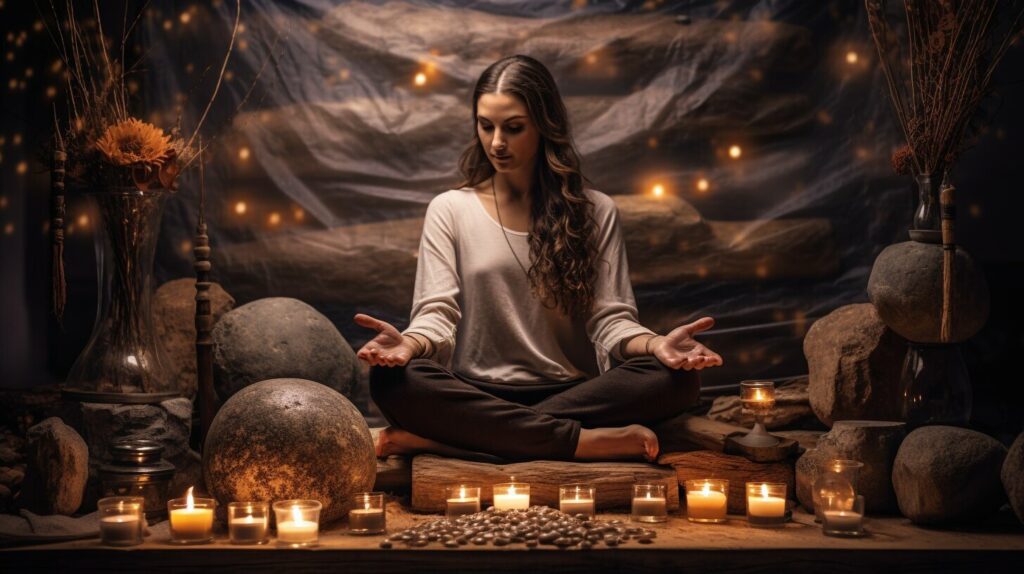
Start on a remarkable exploration titled “Global Meditation Practices: A Guide to Inner Harmony and Spiritual Diversity.” This guide takes you on a profound journey across the world’s vast spiritual landscapes, offering a glimpse into the serene and diverse practices of meditation that have been cultivated by various cultures. Dig into the heart of Zen meditation from Japan, feel the powerful resonance of Transcendental Meditation from India, or discover the art of mindfulness from the Buddhist tradition. Each technique presented invites you to forge a deeper bond with your inner self and the encompassing world. Begin this transformative voyage and uncover the peace and tranquility inherent in each method.
Buddhist Meditation Practices
Buddhist Meditation Practices aim to foster serenity, mental clarity, and a deeper comprehension of existence. These methods transcend the confines of religion, extending valuable insights to anyone seeking to enrich their lives.
Buddhism at a Glance
Originating in India, Buddhism is centered around the teachings of Siddhartha Gautama, or the Buddha. Its essence, the Dharma, teaches the attainment of enlightenment through ethical living, meditation, and wisdom.
Vipassana Meditation
Vipassana, or Insight Meditation, encourages transformative self-reflection by closely observing your breath, emotions, and thoughts. This practice enhances mindfulness and the awareness of life’s transient nature, paving the way for spiritual enlightenment.
Metta Meditation
Metta Meditation focuses on radiating love, kindness, and positive intentions towards oneself and others. This practice is founded on the belief in universal deservingness of love and compassion, promoting emotional healing and empathy.
Mindfulness Meditation
Mindfulness involves present-moment awareness, fully immersing in the here and now without judgment. This technique is known to alleviate stress, enhance cognitive functions, and foster mental clarity.
Hindu Meditation Traditions
Hindu Meditation encompasses a spectrum of practices aimed at transcending the mundane to unite with the divine essence.
Essentials of Hindu Meditation
These ancient practices are deeply embedded in Hinduism’s spiritual fabric, striving for wellbeing and spiritual enlightenment.
Transcendental Meditation
This technique involves quiet, mantra-based meditation to relax the mind and expand consciousness, significantly reducing stress and enhancing inner peace.
Yoga and Meditation
Beyond physical postures, Yoga in Hinduism integrates breathing exercises and meditative practices, aiming for holistic harmony of body, mind, and spirit.
Mantra Meditation
Repeating a sacred word or phrase clears the mind and facilitates deeper meditation, using the mantra as a beacon to navigate through distractions.
Islamic Meditation Practices
Islamic Meditation combines reflective meditation and prayer, enriching one’s faith and closeness to Allah through spiritual practices.
Dhikr: Remembrance of Allah
Dhikr involves chanting God’s names or Quranic phrases, fostering a continual consciousness of divine presence.
Muraqaba: Sufi Meditation
This form of meditation deepens one’s divine connection through focused contemplation on God or visualizing spiritual guides.
Tasbih: Glorifying God
Utilizing prayer beads, Tasbih is a practice of praising and thanking God, integrating into the broader practice of Dhikr.
Christian Meditation Methods
Christian meditation seeks to deepen one’s divine relationship through reflective prayer and scripture engagement, nurturing inner peace and spiritual growth.
Centering Prayer
This modern technique emphasizes silent communion with God, fostering intimate divine connection through quiet contemplation.
Lectio Divina
‘Lectio Divina’ or divine reading, involves meditative scripture reading, encouraging a profound engagement with sacred texts and enhancing prayer life.
Jesus Prayer
This simple, repetitive prayer cultivates humility and spiritual intimacy, centering on the plea for mercy from Jesus Christ.
Contemplative Prayer
Focusing on silent receptivity to God’s presence, this practice allows for a deep, loving communion with the Divine.
Native American Spiritual Practices
Emphasizing nature’s significance and life’s interconnectedness, these practices offer unique pathways to inner and communal harmony.
Shamanic Journeying
This traditional practice facilitates spiritual exploration and guidance through altered states of consciousness, connecting with the spiritual field.
Vision Quest
Undertaken in nature’s solitude, a Vision Quest seeks personal revelations and life purpose under the mentorship of tribal elders.
Smoke Signals Meditation
Using sacred herbs like tobacco and sage, this practice cleanses the meditator and their surroundings, fostering a state of spiritual purity.
Medicine Wheel Meditation
Creating a Medicine Wheel, a symbolic circular arrangement, supports introspection, healing, and a profound connection with the universe Evidence from the National Center for Complementary and Integrative Health corroborates this.
Taoist Meditation Techniques
Rooted in ancient Chinese philosophy, Taoist meditation emphasizes harmony with the Tao, aiming for mental tranquility and understanding of nature’s flow.
Qi Gong
This practice harmonizes breath, movement, and awareness, enhancing energy flow and overall wellbeing.
Tai Chi
Combining gentle movements with breath work, Tai Chi promotes physical health, stress reduction, and mental balance.
Inner Smile Meditation
Encouraging inward smiling to each body part, this technique cultivates inner love, gratitude, and healing, leading to peace and harmony.
Zen Meditation
Zen, a form of Buddhism, focuses on accepting reality as it’s, through mindful observation and sitting meditation, fostering profound insights into existence.
Jain Meditation
Jainism offers meditation techniques like Preksha and Anupreksha, promoting self-awareness, peace, and spiritual clarity through contemplation and mindfulness.
Jewish Meditation
Jewish practices, including Hitbodedut and Kabbalistic meditation, facilitate a personal and mystical connection with God, deepening spiritual understanding and devotion.
African Spiritual Meditation
African traditional practices, including traditional wellness practices communication and ritual dances, emphasize holistic connection with the spiritual domain, nature, and community for guidance and healing.
In sum, blendglobal meditation practices reflects a universal quest for inner peace, clarity, and spiritual connection. Regardless of the specific tradition, each method offers a unique avenue toward self-discovery and enlightenment, inviting individuals to find the path that resonates deeply with their spirit.

Meditation Techniques
Here are three excellent resources for learning and practicing various this method:
- Mindful.org offers a wide range of materials and guidance on meditation, emphasizing mindfulness practices. Their guide covers basic techniques suitable for beginners, including how to get started with meditation, understanding mindfulness, and practical tips for making meditation a habit. They also offer guided meditations for beginners, focusing on breath awareness, body scans, and walking meditations. For more detailed practices and advice, visit their site at www.mindful.org.
- Positive Psychology provides an extensive list of it, including progressive muscle relaxation, mantra meditation, transcendental meditation, and Zen meditation, among others. They also examine into guided meditation and visualization techniques, providing a useful starting point for beginners looking to explore different forms of meditation. Their content is backed by science, aiming to improve mental, physical, and emotional health through mindful practices. Check out their techniques at positivepsychology.com.
- Anmol Mehta | Mastery of Meditation and Yoga is a treasure trove of free resources on meditation and yoga. The site offers a vast array of free online yoga and meditation classes, yoga breathing exercises (pranayama), and articles on Zen teachings and practice. It also covers a broad spectrum of related topics such as health & wellbeing, diet & weight loss, personal development, and spiritual enlightenment. For a comprehensive dive into meditation and yoga, explore anmolmehta.com.
Each of these websites provides a unique perspective and range of meditation practices suitable for everyone from beginners to advanced practitioners. Whether you’re interested in mindfulness, mantra chanting, or exploring Zen meditation, these resources offer a wealth of information and guidance to support your meditation journey (Mindful) (PositivePsychology.com) (Anmol Mehta).
This connects directly to what we discuss in Power of Cultural Healing: Sacred Traditions.
Frequently Asked Questions
What is Meditation Techniques?
this is a holistic practice that works with the body’s subtle energy systems to promote balance and well-being. Practitioners aim to channel or redirect energy flow to support the body’s natural healing processes. Consult a healthcare provider for medical concerns.
What are the potential benefits of Meditation Techniques?
Reported benefits of the include stress reduction, improved relaxation, enhanced emotional balance, and a greater sense of overall well-being. Individual experiences vary, and scientific research is ongoing. This should complement, not replace, conventional medical care.
Are there side effects of herbal remedies?
Some herbs can cause side effects or interact with prescription medications. Common concerns include allergic reactions, digestive upset, or drug interactions. Always inform your healthcare provider about any herbal supplements you are taking.
How do I get started with Meditation Techniques?
Begin with short daily sessions of 10-15 minutes and gradually increase duration. Guided sessions via apps or classes can help beginners build proper technique. Consistency matters more than session length for developing a sustainable practice.
Can Meditation Techniques be combined with conventional medicine?
Many people use this particular alongside conventional medical treatments as a complementary approach. Always inform your healthcare provider about any complementary practices you use. Never discontinue prescribed treatments without medical guidance.
Research from PubMed supports many of the practices discussed here.